Psychological Flexibility, RFT & ACT

Time, Values, and Committed Action
We can not get anything out of life. There is no outside where we could take this thing to. There is no little pocket situated outside of life, which would steal life's provisions and squirrel them away. The life of this moment has no outside.
—Jennifer Matthews
Let’s start with some big questions: what even is time, and what does it mean to manage it? This question is at the heart of much stress and struggle in our culture. It's hard to conceptualize time–we can't "see" it, we can only experience it. To describe time, most cultures use spatial metaphors of some sort (Boroditsky, 2011). However, we don't all use the same ones. In English, we talk about future events as being “ahead” of us, while in other languages, such events might be described as being “below” (Mandarin) or “behind” (Aymara), reflecting how we read and write text. A few Australian Aboriginal languages do not use relative spatial terms (such as left/right), instead relying on absolute direction (north/south/east/west), and when they construct representations of time, such as when gesturing or sequence events, they do so from east to west!

A Functional Analysis of Language
We should not ask what the words mean, as though they contained secrets, but what they are doing, as though they embodied actions.
—Denis Donaghue
We cannot speak of language as a “thing” that someone may or may not possess—rather, it is a complex set of skills, a repertoire of operant behavior. The skills commonly referred to as “language” or “cognition” develop in much the same way as any other behavior—through an individual history of interactions with the environment. And, as behavior, language cannot be examined except as an act within a particular context. That is, we cannot examine single words or phrases or sentences in isolation, based on their topography. We cannot identify what a behavior “means”—whether in the form of speaking a sentence or running out of a room—except in terms of its function.

Frame by Frame
The expert in anything was once a beginner.
—Helen Hayes
As behavior analysts, teachers, therapists, or any other helping professional, we spend our days listening and speaking to others, whether we are attempting to understand a particular problem, giving advice or providing instructions, writing treatment plans or lessons, teaching and training, and so on. That is, we engage in “language.” It seems obvious that “language” is critical to an understanding of human behavior—and yet at the same time, it is so embedded in our lives that we rarely examine it.

Thriving Through Challenges: A Behavior Analytic Perspective on Resilience
What does it mean to thrive? What makes someone resilient? These are questions we often ask ourselves when faced with life’s inevitable challenges. While some people seem to weather storms effortlessly, others struggle to stay afloat. But what exactly sets these resilient individuals apart?

Living Interdisciplinary Collaboration (or least trying to)
Collaboration begins with presence. Shared purpose grows from awareness. Before any coordinated effort, there is a moment of noticing. Every person who enters a conversation carries a history, experiences, curiosities, and reasons for being there. Even pausing to ask what brought me here becomes part of collaboration, awareness comes first.
My relationship with collaboration began long before my research. Early in my career, I learned what it feels like to feel welcomed and what it feels like to feel peripheral. There were environments where my presence flowed easily and others where it felt complicated. Underneath that were subtle signals, tension, and uncertainty about belonging.
Context, Capacity, and Compassion: A Mother’s Reflection on Practice
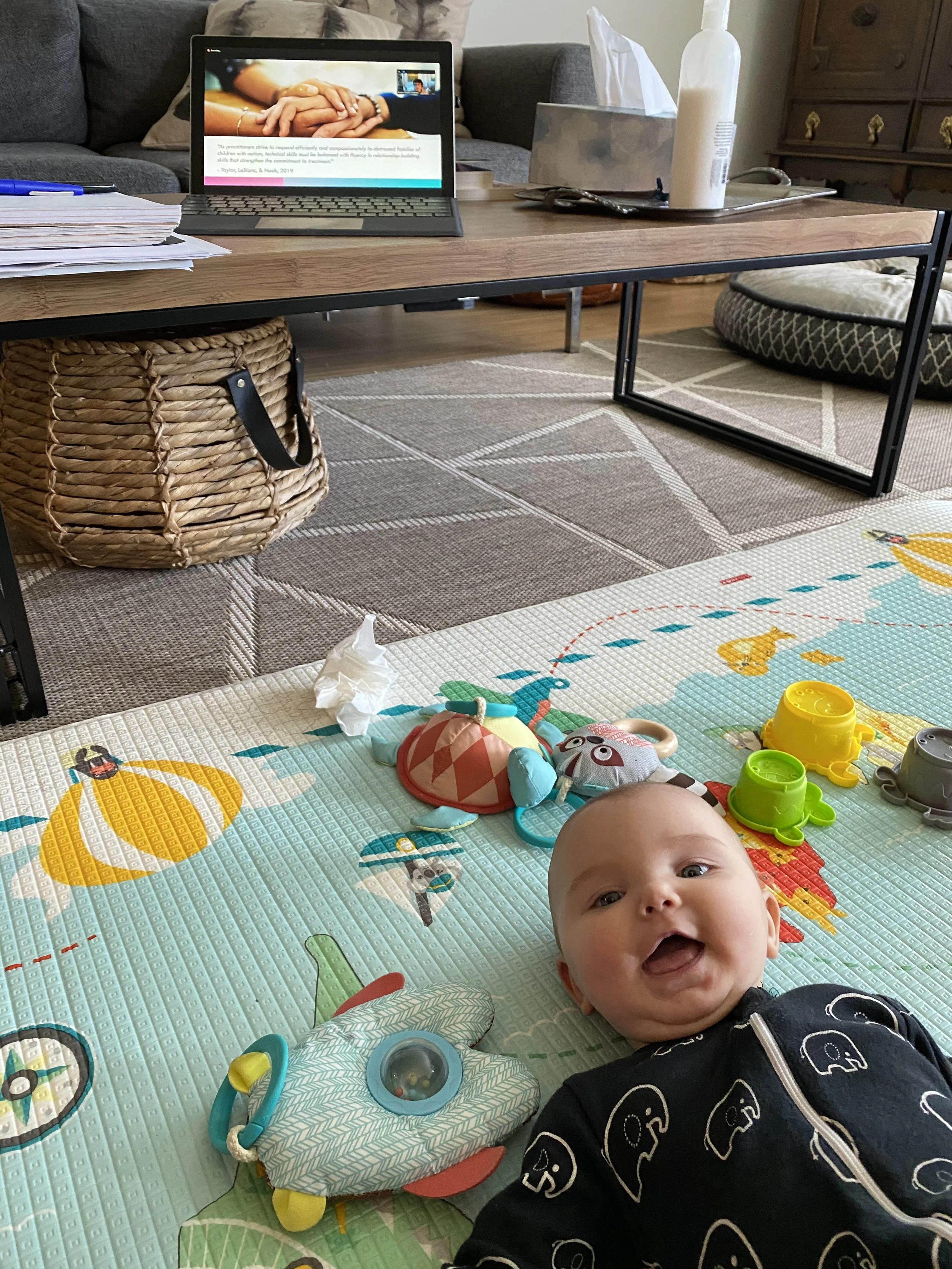
For the longest time, I resisted motherhood. I told myself that being a mother would not change my practice at all. But now that I am a mother, I can acknowledge that it has completely changed my practice. Although, let me explain — it isn’t as simple as A caused B.
In 2019, I became pregnant, and in 2020, I had my daughter. As we all know, 2020 was a particularly challenging year as we pivoted our lives due to the pandemic. This had a significant impact on me when my daughter was born. My husband’s away-work schedule changed — he went from one week on and one week off to two weeks at a time. I wasn’t able to have the support or social networks I could have benefited from, and there wasn’t the availability of resources and programming to connect with other moms. It was an isolating time.

When Autism Becomes Your Teacher: How RFT and ACT Shaped Me as a Parent and a Scientist
As we often say in contextual behavioral science, behavior makes sense in context. But sometimes, the context that shapes you most is not a lab, a classroom, or a clinic.
Sometimes, it is your child.
Before I ever studied Relational Frame Theory (RFT) or practiced Acceptance and Commitment Therapy (ACT), I was an accountant. My professional world was structured, precise, predictable. Then my daughter was diagnosed with autism spectrum disorder and intellectual disability. Predictability disappeared.

What international collaboration really changes (and why it matters) | Ce que la collaboration internationale change vraiment (et pourquoi ça compte)
When working in RFT or ACT, we talk a lot about context, variability, and function rather than form. And yet, for a long time, many of these models developed in a very specific context: that of the English-speaking, academic, occidental world.
Quand on travaille en RFT ou en ACT, on parle beaucoup de contexte, de variabilité, de fonction plutôt que de forme. Et pourtant, pendant longtemps, une grande partie de ces modèles s’est développée dans un contexte très précis : celui du monde anglophone, universitaire, occidental.
It’s the Little Things: Why EAB Still Matters in RFT and ACT Spaces
As we’ve noted, communities of practice involve the sharing of stories, as they are practitioner spaces, which recognize the value of many ways of knowing about our work, exploring diverse perspectives, as told through our real life experiences. Over the next few weeks and months, we’ll be sharing some of those stories—the topics that each of us are passionate about, reflecting the range of experiences we all bring to the lab table. This week, Barb Kaminski shares her story, we hope you enjoy it!
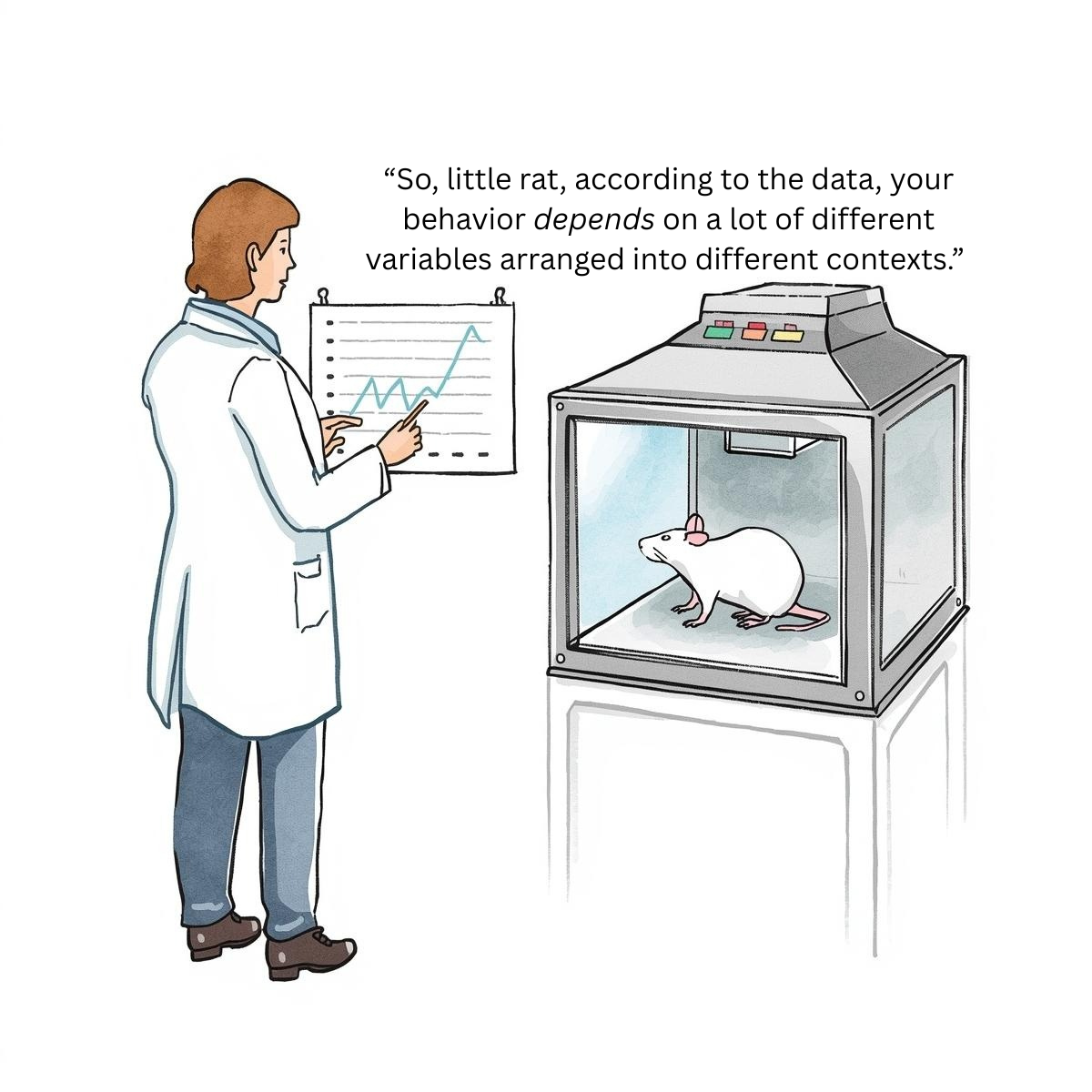
If you had asked me earlier in my career where I’d end up spending my professional time, being part of Constellations would not have been an obvious answer. My training, and much of my professional career as a behavior analyst, was in the experimental analysis of behavior; labs, carefully arranged conditions, and tight operational definitions. But EAB has always been deeply contextual to me.

Cooperation, collaboration, “labs” and communities of practice—what are we doing here?
In designing Constellations as a practitioner lab, we honestly did not have many clear models to follow. Most of us had never been part of a research lab group, and we weren’t primarily focusing on research, so what was it that we were meeting for, and how would we do it? We decided to hold the idea of “labs” and “lab meetings” loosely, seeing what showed up as we simply gathered in service of our primary purpose—growing our collective understanding of contextual behavior science, and using that understanding in our work to create more effective, nurturing, contextually sensitive environments and communities that reflect shared values of compassion, cultural humility, sustainability, and social justice.

Annual Review from the Lab!
What we have been talking about:
This past year, we launched an ongoing series of conceptual and theoretical discussions of articles examining the behavioral underpinnings of ACT, including conceptualizations of fusion/defusion from an RFT perspective, broad multi-disciplinary views of acceptance, and ongoing consideration of defining psychological flexibility/inflexibility. (We’ve listed these below for anyone interested.*)
Our RFT and Psychological Flexibility meetings continue to provide a space to refine our case conceptualization process and tools through ongoing case discussions.
Why “Constellations”
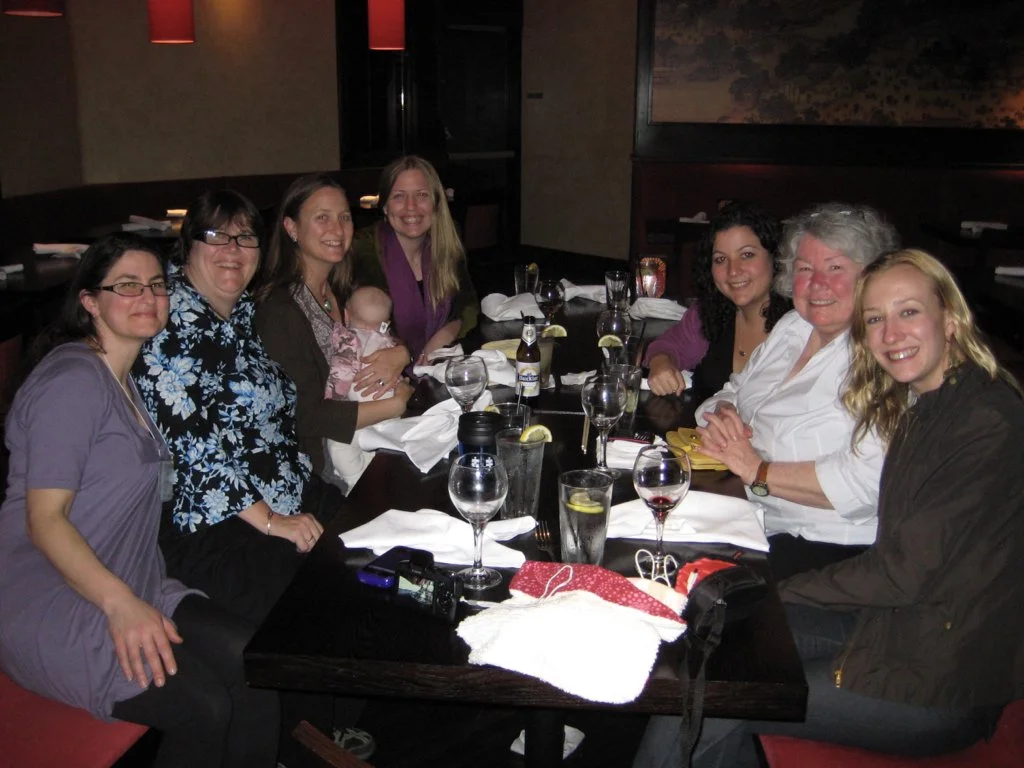
We have many reasons for choosing the name, "Constellations" for our practitioner lab as well as our larger community of practice and training space. First and foremost, through the connections we hope to foster here, the possibilities in our science and practice are as exponential as the constellations. And what better metaphor for a community exploring language than a "constellation"—something that is an abstract, arbitrary pattern in the sky that we have imbued with meaning and stories that shift depending on context and culture? We are continually adding to our collective story as we practice and learn from and with one another.
There is another, more personal reason we chose this name, though.
Introducing the Constellations Practitioner Lab
Happy New Year! We’d like to begin 2026 by introducing you to our practitioner lab, Constellations. We’ll be blogging here about all kinds of things relevant to psychological flexibility, ACT, RFT and behavior analysis, reflecting the ongoing discussions and projects we are all working on both individually and together. This month, we’ll be sharing our reasons for creating a practitioner lab, how we run the lab as a community of practice, and why that is important to us within the larger context of the field.